You're not overpaying for product photos. You're paying twice for a quarter of them.
A seller doing €3k a month posted his photography bill and asked whether €200 was normal. Forty-seven replies arrived, almost all of them a cheaper price per image, and he ended up driving it from €5 to €0.18. Buried in his own first post was the number nobody picked up, including him — and it is the one that was actually costing him money.
The question
Forty to fifty photos a month at €4–5 each. Two to three days' wait per delivery. Quality hit or miss — ten of them had to be redone last month. Two hundred euros a month on white backgrounds, and lifestyle shots quoted at €20–30 apiece on top. An Amazon FBA seller three months into a home-goods business laid all of that out in r/AmazonFBA on 21 February 2026 and finished with the line that gives the thread its mood:
Feels like I'm working for my photographer at this point.
What forty-seven replies gave him
A queue of tools. A €120 lightbox and a weekend learning Photopea. A 3D renderer at $29 a month. Nano Banana, twice. A background remover, several. Two people offering to generate images for free if he sent a photo. By the end of the thread he and his brother had built and posted their own white-background tool at €0.18 an image, which is a 96% cut on the number he came in with.
One reply went somewhere else, and it is the reason this article exists:
€200 a month for 40 to 50 images is not crazy cheap, but it is not outrageous either. The real issue is consistency. If quality is hit or miss and you have to redo work, that is where you are actually losing money.
Do his arithmetic and the thread looks strange
Ten redos out of forty-five is a 22% defect rate. Put his own numbers in a row and the shape of the problem is not subtle:
| His month, as he described it | |
|---|---|
| Photos ordered | 40–50 |
| Price each | €4–5 |
| Total | €200 |
| Had to be redone | 10 |
| Wait to find out | 2–3 days |
He spent the thread on line three. Line four never comes up again — not in his replies, not in his update, not in the tool he built. And line four is the expensive one, because a defect does not cost €5. It costs the two to three days it takes to discover, plus the two to three days for the replacement. At that latency he can try about four ideas a month. That is the real bill: not €200, but a creative loop measured in weeks at the stage of a business where everything depends on trying things.
Cutting €5 to €0.18 saves him €190 a month. It does nothing whatsoever to the thing that made him post.
What actually changes, and it is not the hit rate
Here is the part I have an obvious interest in, so take it with the disclosure at the top. A generated image does not have a better defect rate than a Fiverr gig. Ours certainly doesn't. Below are three takes from one plan in our own library — a rose-gold marquise ring, photographed on a yellow cloth on a kitchen table, pointed at a reference:
Three takes, one keeper
One plan, three runs, 1K each. Nothing retouched, nothing hidden.
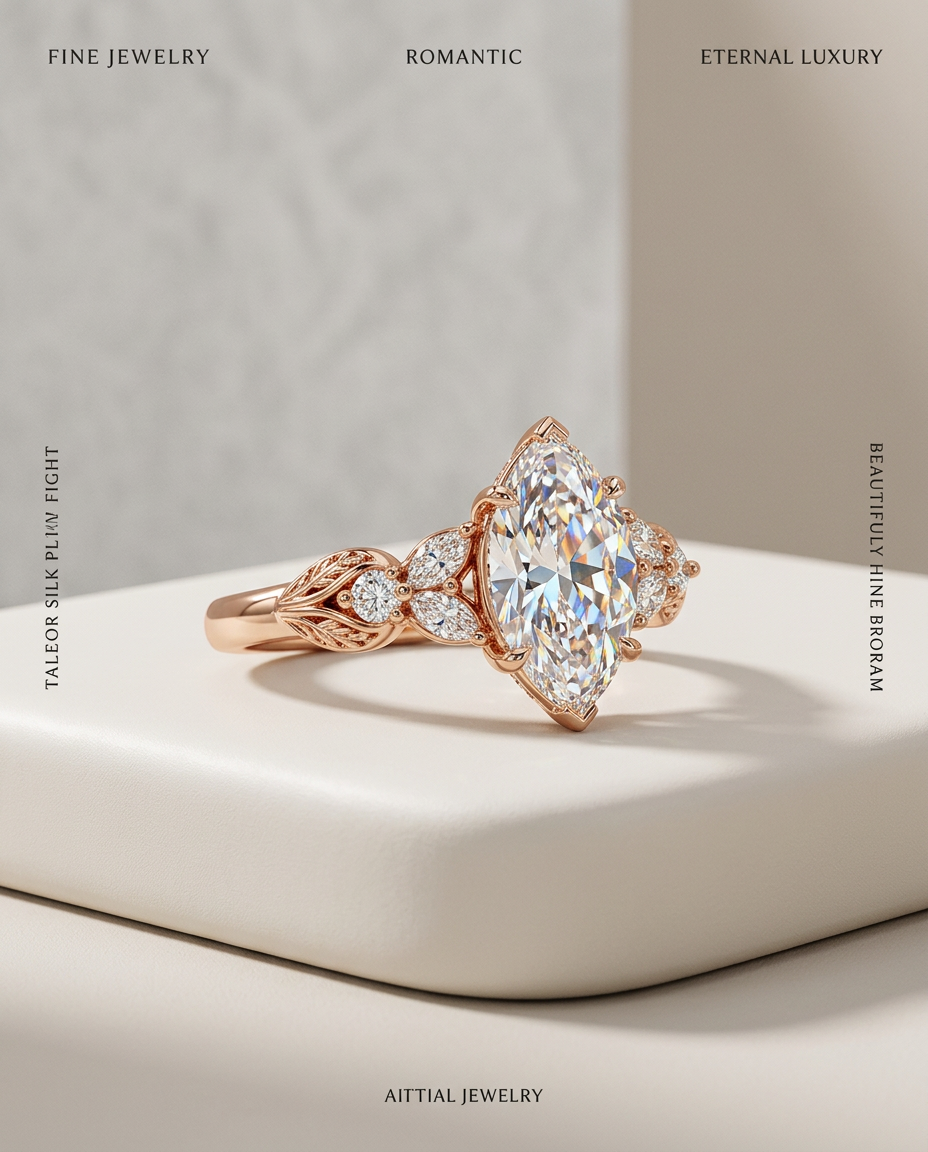
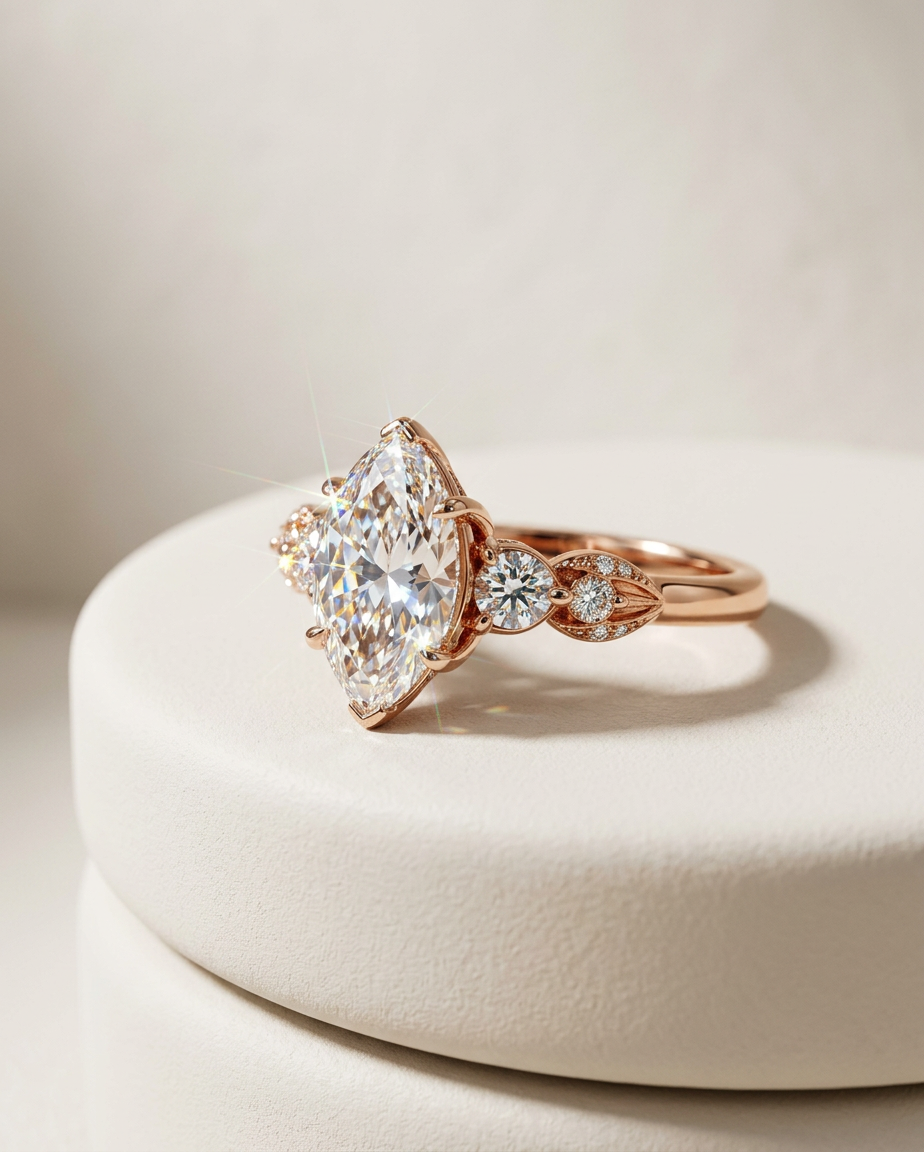

A 33% hit rate, shown rather than described. Anyone claiming a generator gives you a finished image every time is selling you the first take and hoping you don't run a second. Try it with a reference of your own → free · two images a day
So the variance is still there. What moved is what a bad one costs: one point, and under a minute to find out. Three takes to get a keeper is a rounding error at that price, and the same three takes on Fiverr are €15 and a week and a conversation.
You are not buying a better hit rate. You are buying the right to have a bad one.
That is a smaller claim than "AI replaces your photographer" and it is the one that survives contact with a real month. It also changes behaviour in a way price never does: when a redo is a week away you accept the mediocre image, because the alternative is a gap in your listing. When it is forty seconds away you throw two away without thinking about it, and the thing you publish is the third one.
Where this stops
His main images are the wrong job for this. He needs #FFFFFF at Amazon's specs, and more importantly he needs the product to be exactly the product. A whole-frame generator can quietly alter it — I have written up what that looks like when it happens, with the picture. Shoot the main image, or use a background remover on a real photograph. The lifestyle and ad variations are where a cheap loop earns its place, and they are also the ones he was being quoted €20–30 for.
The checking does not scale either. Three takes you can eyeball. Forty-five a month across a growing catalogue, you cannot — and the cheaper generating gets, the more images there are to check. That is a real ceiling and it arrives sooner than people expect.
And one honest note about the lightbox. The reply telling him to buy €120 of equipment and shoot his own whites is good advice that he rejected for a good reason: he does not have sixty hours a month. Both things are true. A cheap loop is not a substitute for owning one clean photograph of your product — it is what you do with that photograph afterwards.
The first one is free because the first one is often wrong.
Bring a reference and a phone photo of your product. If what comes back has garbled type or missed the brief, that is a normal Tuesday — generate again, and keep the one that works.
Two free images a day. No card, nothing to cancel.
Sources.
- The thread: “I'm spending €200/month on Fiverr for product photos. Is this normal or am I getting ripped off?”, r/AmazonFBA, 21 February 2026, read on 25 September 2026. Every figure above — the volume, the price, the wait, the ten redos — is from his own first post.
- The three takes are from our own library: one plan, three runs, nothing retouched and nothing left out of the set.
- Disclosure: I build Swipe60, which is one of the cheap loops this article is about. The claim it makes on my behalf is deliberately small.