Your AI product photos look flat. It isn’t the model — it’s how the reference was read.
You gave it a reference whose look you liked and a photo of your own product, and what came back is accurate, clean and dead. Changing models does not fix that. It happens when the reference gets read as a list of separate attributes — and what makes a picture work is almost never inside one of them.
The question
The clearest account of this comes from someone who built the machinery himself and watched it happen. A product photographer and retoucher who works on luxury watches and jewelry posted in r/StableDiffusion on 27 July 2026: he had built a pipeline out of open-weight vision-language models — several analysis passes, one model cataloguing scene, style and product separately, feeding a merge step handled by a different, smaller multimodal model that sees the actual images.
The goal is one sentence long. Take a reference image whose lighting and background you like, take your real product photo, and get a picture of your product in a scene inspired by that reference.
What he got was whack-a-mole. In his order:
- The style was ignored outright — the output defaulted to a generic version of the scene. Fixed.
- Lighting effects started getting copy-pasted where they made no physical sense: a sparkle that belongs on a pavé setting, landing on plain brushed steel. Reads as fake instantly. Fixed.
- Then the reference's dramatic ambient glow — which he reckons was about 40% of why that image looked striking at all — quietly disappeared once he toned the on-product sparkle down. He notes that the two things had nothing to do with each other.
Every fix made the output "technically more correct" without it ever feeling like the poster-worthy image he was going for.
That is a precise description of a failure most people only feel. The picture is right. The picture is dead.
What the thread told him
Seven replies. Four distinct answers, and every one of them is partly right:
- You are rebuilding Photoshop out of AI. Add AI to a toolset you already have — sketch, generate, refine by hand, back through, refine again.
- You are pressing a generation tool into editing. Different job, different tool.
- Go and shoot it. The images he is chasing are made in camera, on location, and if the source material is poor the honest fix is to redo it properly.
- Split it further. Get composition first, then inpaint detail by detail so each pass can't overwrite the last.
The shooting answer is simply true for the job he named — a campaign master for a luxury watch is shot, not assembled. But none of the four answers the question he actually asked. He did not ask how to get a correct image. He asked why the correct one has no punch. And the last answer — split it further — is more of the thing that caused the problem.
Where the punch went
This is what people mean when they say their AI product photos come out flat, or that the model ignored the reference image — the same cause sits under both. The clue is in his own sentence. The glow vanished when he tuned the sparkle, "even though those two things had nothing to do with each other."
They had everything to do with each other. A sparkle on the metal and a glow behind the product are one lighting decision seen from two ends: a single strong source, placed behind and off-axis, throwing a halo into the background and catching an edge on the way past. Describe them as two separate attributes and you can turn one down without the other following — which is exactly the thing a photograph physically cannot do, and exactly why the result stops reading as a photograph.
A pipeline made of specialist passes can only carry what its seams carry. The reason a reference image works is almost never inside one slice. It is in how the slices agree.
Scene in one pass, style in another, product catalogued in a third. Each pass is accurate about its own slice. The relationships between them — the part that made someone stop scrolling — fall through the gaps between the passes. So every fix improved a part, and the whole kept getting flatter. He was not failing to describe the reference. He was describing it in pieces, and the pieces were the problem.
The route: one read, and a plan you can actually see
The change is not a better model. It is doing the analysis once, with both images in front of it at the same time, and writing out a single plan in plain sentences — not tags, not a scene graph, not three JSON blobs to be merged later.
Two things follow from that, and they are the whole of it.
Relationships survive, because nothing was split. A sentence that says the key light sits behind and to the left, throwing a warm halo into the background and catching the top edge of the case, carries the glow and the highlight as one fact. There is no seam for them to come apart at.
When something does go missing, you can find it. This is the part that matters more than it sounds. The plan is text, in front of you, before and after generation. The glow is a sentence in it. If the result comes back flat, you read the plan, see that the sentence about the background halo is gone or got weakened, put it back, and generate again. You are not re-tuning an analysis pass and hoping the next run keeps what the last one had.
That is a lower ceiling than a hand-built pipeline and a much shorter loop. For the work most people are doing — a product they sell, a reference they saved, a picture needed this week — the shorter loop wins, because the number of attempts you can afford is what decides whether you get a good one.
The same read, on an ordinary reference
A plain studio photograph of two diamond studs, a phone snap of a ring on a yellow cloth, one generation at 1K. Nothing retouched.
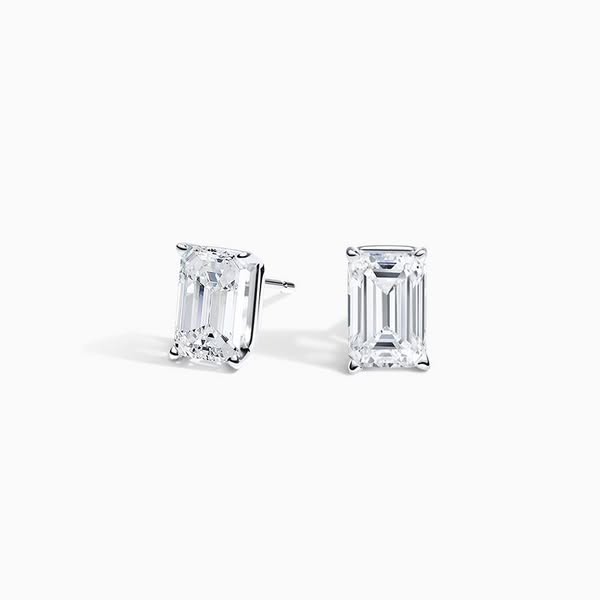
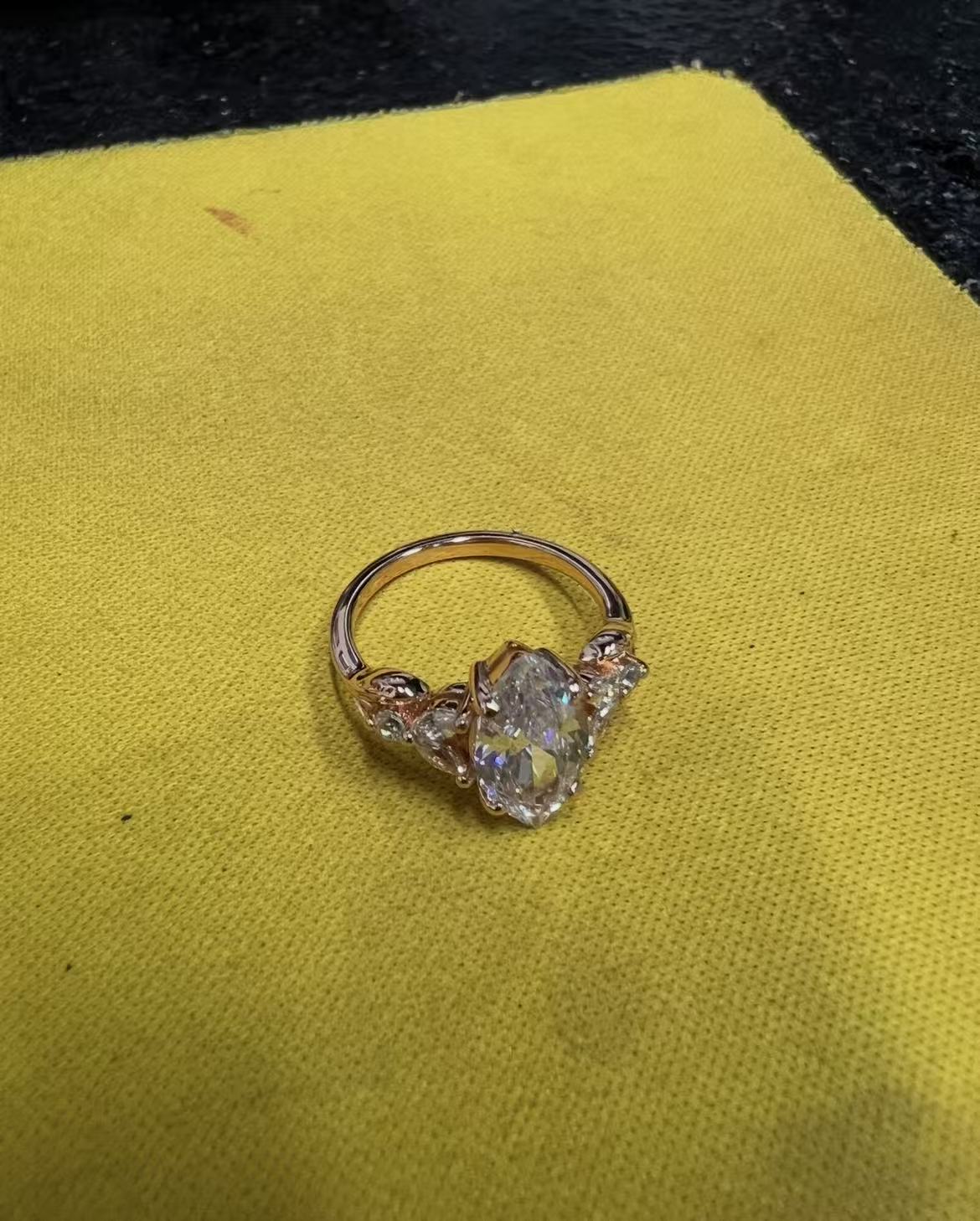
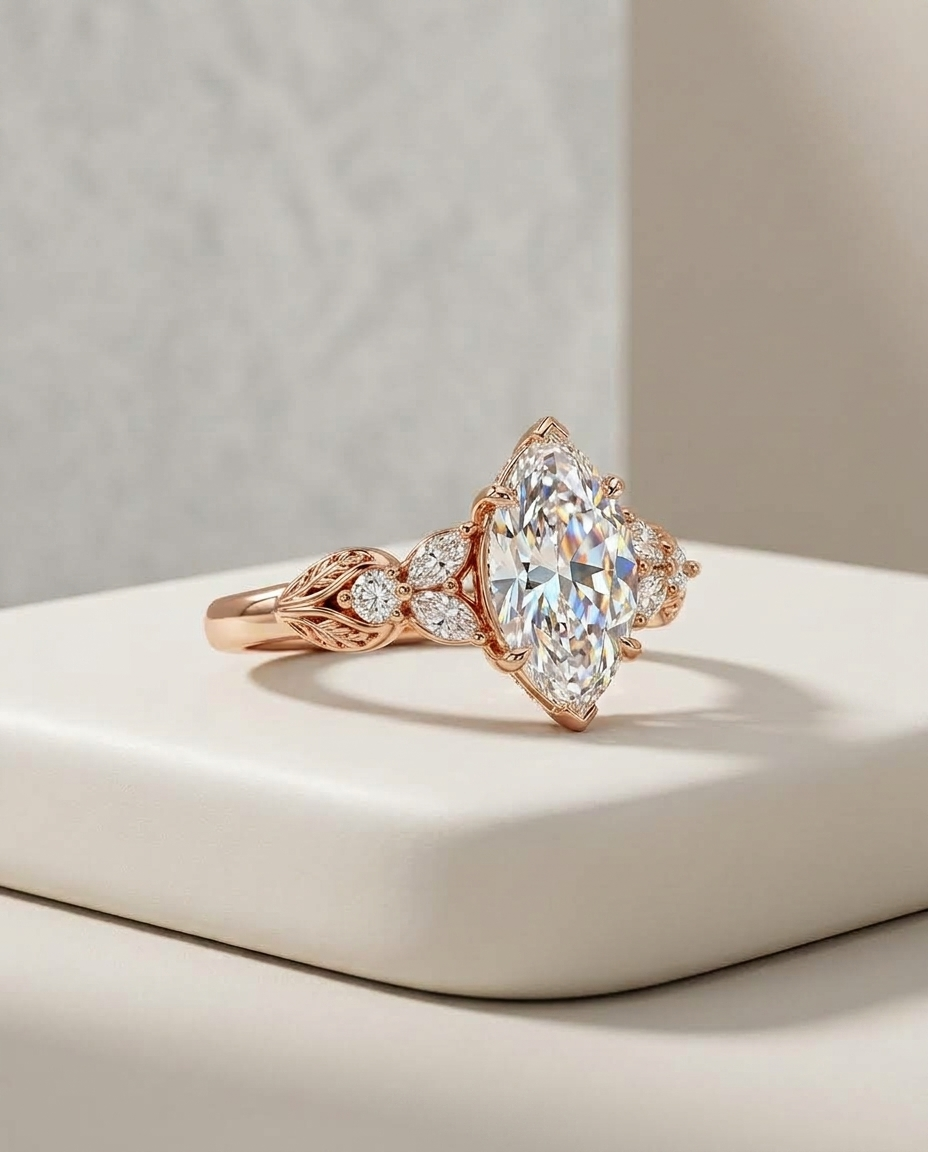
Look at where the light agrees with itself: one soft source from the upper left, the highlight running along the top of the stone, the shadow falling to the right, the wall behind darkening in the same direction. Those arrived together, out of one reading — not assembled from three. And the ring is still the ring: marquise centre, marquise side stones, the leaf-engraved shoulders, rose gold. This reference has no dramatic glow of the kind the thread was chasing — it is the plain case, and worth showing as the plain case. Try it with your own reference → free · two images a day
Where this stops
It is not a retoucher. For a campaign master of a twelve-thousand-dollar watch, the final pass is still a person in Photoshop, and the reply telling him to shoot on location is right about that job. What this replaces is the twenty attempts before the final pass, not the final pass.
The reference supplies the room. Your photo supplies the product. What should transfer is treatment — where the light comes from, what the product sits on, how tight the crop runs, what is behind it. What must survive untouched is everything that makes the piece the one you actually ship: the dial, the bezel, the stone count, the engraving, the hallmark.
Small detail at small size is where it drifts first, and jewelry is the worst case for exactly that reason. So check the piece, not the picture: hold your own photo next to the result and count. If something is wrong, generating again costs one image, not an afternoon.
You already have the reference.
Upload the image whose look you want and a phone photo of your product. You get the plan — in sentences, editable — and the first image built from it. If the glow is missing, it is missing from a line you can see.
Two free images a day. No card, nothing to cancel.
Sources.
- The thread: “Been stuck on this for a few weeks and wondering if anyone's dealt with something similar”, r/StableDiffusion, 27 July 2026 — the pipeline, the three failure modes and all seven replies are his and theirs, read on 12 September 2026.
- Disclosure: I build Swipe60, which does one-pass reference reading with an editable plan. The “where this stops” section is there because of that, not despite it.